
I spent two wonderful weeks in July exploring northern and central Italy: Lombardy (Lake Como), Emilia-Romagna, and Tuscany. Returning to some favorite places while discovering new ones along the way.

But before we begin, I highly recommend exploring my Tuscany series. If you’re planning a trip, you’ll find plenty of inspiration and recommendations to help you create your perfect itinerary.
Tuscany is one of Italy’s most breathtaking regions. It’s home to hundreds—if not thousands—of charming villages and historic towns with stunning architecture. Outstanding restaurants, vineyards stretching across rolling hills, fields of poppies and sunflowers, ancient olive groves, and centuries-old villas framed by towering cypress trees… that’s Tuscany.
But before we begin, I highly recommend exploring my Lombardy series. If you’re planning a trip, you’ll find plenty of inspiration and recommendations to help you create your perfect itinerary.
Lombardy is a region with a unique character and a truly special atmosphere. Here, the majestic Alps meet the crystal-clear waters of Lakes Como, Maggiore, and Garda, while its cities are rich in history, culture, and timeless beauty. Milan—the world capital of fashion and design—is just a short journey from charming historic towns, renowned wineries, and elegant lakeside villas. Lombardy is where breathtaking landscapes, art, and contemporary Italian lifestyle come together in perfect harmony.

Lombardy: Lake Como
Lake Como is a place of extraordinary beauty and timeless elegance. Its emerald waters are framed by dramatic mountains, while historic villas, manicured gardens, and picturesque villages with narrow cobbled streets dot the shoreline. There’s a unique sense of peace here: leisurely boat rides, the scent of blooming lemon trees and magnolias, morning mist drifting across the lake, and evenings when the lights of the villages shimmer on the water. Lake Como is where nature and Italian elegance exist in perfect harmony.
I love this place, not only because it’s beautiful, but because it marked the beginning of my own Italian story. In 2015, after almost a fifteen-year break, Lake Como became the first destination I visited on my own in Italy. Before that, the last time I had been here was when I was ten years old.
Yes, Lake Como is famous for its celebrity villas and luxurious hotels with picture-perfect terraces. But life here has never been only about glamour.
In the morning, you can still see fishermen returning with their catch and elderly locals sitting on benches by the water, chatting about the day’s news just as their fathers and grandfathers once did. The ferries linking the villages have followed almost the same routes for more than a century. Even though the engines have changed, their rhythm hasn’t.
In villages like Varenna and Bellagio, the mornings smell of freshly baked bread and espresso drifting from neighborhood cafés. Tourists pause to admire ornate villas, while locals hurry to the market, greeting familiar faces along the way. Lake Como has always carried an air of quiet wealth and understated aristocracy. As early as the nineteenth century, affluent families from Milan and Turin spent their summers here, bringing furniture, servants, and even grand pianos to their lakeside villas. Today, many arrive by train or on a Vespa, but the tradition of spending summer by the lake lives on.
By evening, the lake becomes almost perfectly still, reflecting the mountains and the lights of the villages. On restaurant terraces, the menu is beautifully simple: freshly caught lake fish, creamy polenta, and a glass of crisp white wine. No unnecessary luxury, no celebrity spectacle—just a quiet kind of beauty. And perhaps that’s exactly what makes Lake Como so unforgettable.


And the hotels here are absolutely incredible!


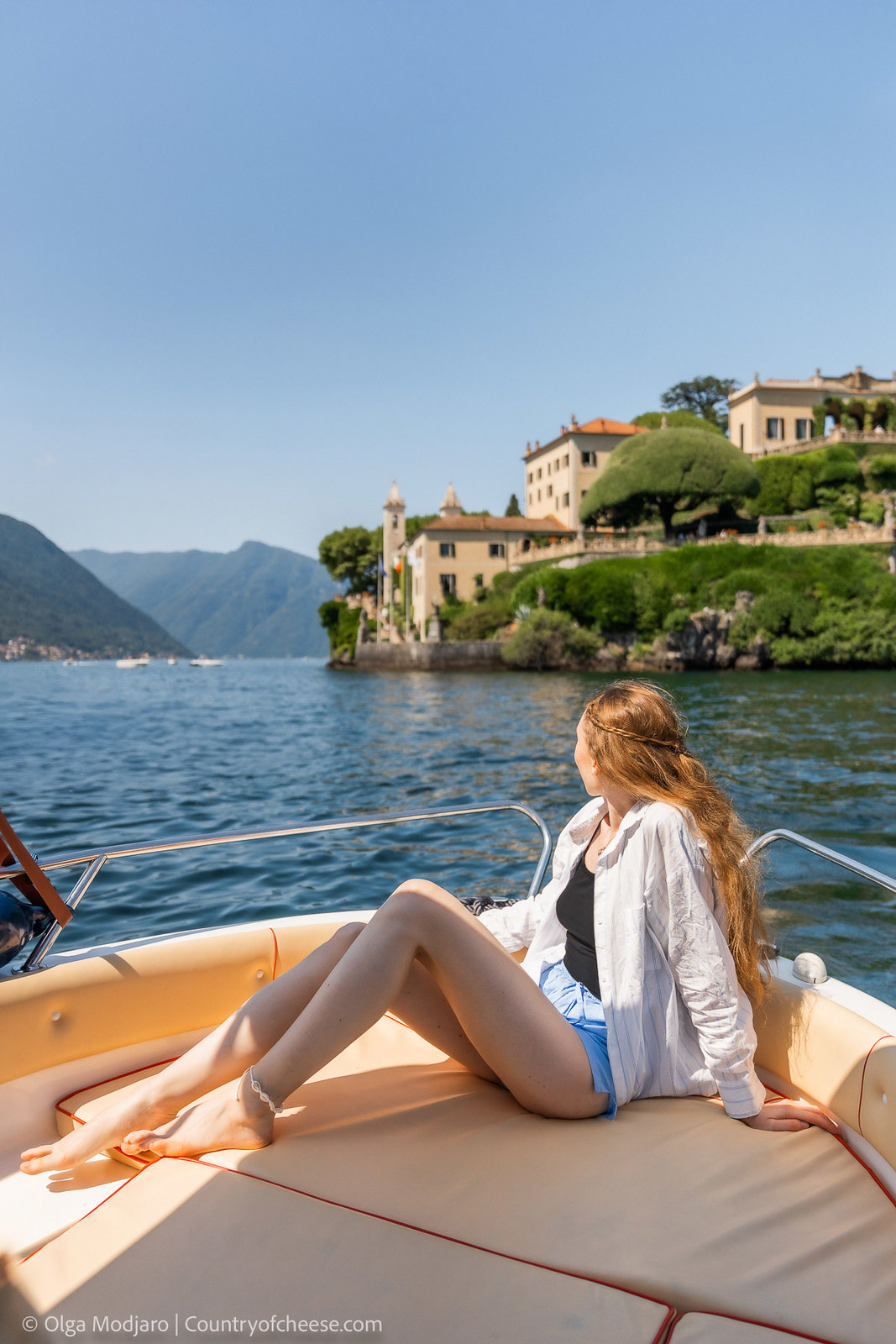
One of the best decisions we made on Lake Como was renting our own boat. Seeing the villages and historic villas from the water is an unforgettable experience. Villa del Balbianello, in particular, looks even more spectacular from the lake. It was absolutely breathtaking—and yes, completely free to admire from the water.
I highly recommend the rental company Lake by Boat di Giovanelli Andrea. You don’t need a boating license or a security deposit. They simply hand you the keys, give you a few basic instructions, and send you off to enjoy the lake.
Returning the boat was just as easy, with no unexpected charges—even though we arrived almost 15 minutes late (I wouldn’t recommend pushing your luck, though!). Just make sure to book in advance, ideally at least a day ahead.
You can check their prices here (fuel and insurance are included):
Tuscany: Maranello
Our next stop was Maranello, home to the Ferrari Museum. As huge Formula 1 fans (and loyal Ferrari supporters), this was a place we simply couldn’t miss.
Interestingly, during that very first trip to Italy when I was ten years old, I stayed in nearby Modena and visited the museum for the first time. More than twenty years later, I finally returned.
That evening, we stayed at a charming agriturismo in Regional Park Sassi di Roccamalatina, one of the most scenic places we visited during the trip. The photo below shows the view from our terrace.

On the way, we also stopped at the Monza Circuit, just outside Milan. A legendary place for every Formula 1 fan.


Tuscany: Florence
Our next stop was Florence. I love this city and have visited it several times before. One of my close friends also lives and studies here, so we were more than happy to stop for dinner together and enjoy an evening stroll through the city.
Florence is a fascinating contradiction. It’s a city bustling with people from morning until late at night, yet everyday Florentine life has long since moved beyond the historic center. People don’t really come here to live—they come here to admire. The magnificent cathedral, which took nearly 140 years to complete. Michelangelo’s David (many visitors don’t realize the one in Piazza della Signoria is actually a replica). The Ponte Vecchio, the only bridge in Florence spared during World War II. And, of course, the countless Medici palaces, quietly reminding everyone who once shaped the city’s history.
Florence is often called the cradle of the Renaissance, and rightly so. Even today, the city feels like an open-air museum. Tour guides wave colorful flags above the crowds, art students linger in front of Botticelli’s masterpieces, and visitors from every corner of the world fill its streets. Yet everyday life continues between it all: neighborhood delicatessens selling ciabatta and prosciutto, family-run artisan workshops that refuse to give in to the digital age, and cafés where locals drink their espresso standing at the counter, as if they’re always rushing somewhere—even when they’re not.
But Florence isn’t only about sightseeing. There’s a distinct personality to the city. For centuries, Florentines have been shaped by competition, ambition, and a certain stubborn pride. In their eyes, this is where modern banking flourished, where influential political ideas took shape, and where much of what we now call the Renaissance was born. Whether or not they would say it quite like that today, there’s still a quiet confidence woven into the city’s character.
And then evening arrives. The crowds slowly disappear, the Arno reflects the lights of the Ponte Vecchio, and Florence suddenly feels intimate. Walking through its narrow streets, it’s easy to imagine someone in Renaissance robes appearing around the next corner, carrying a bundle of manuscripts under one arm. In Florence, the past never really feels like the past.
I also have a free Google Map with my favorite restaurants, cafés, bars, hotels, and hidden gems in Florence—feel free to explore it while planning your trip.


Tuscany: Chianti
Chianti is a landscape of endless vineyards stretching toward the horizon, with winding roads that ribbon their way across gentle hills. Between them lie centuries-old stone farmhouses with terracotta roofs and tiny villages that seem untouched by time. Almost every hilltop is crowned by a castle or an elegant villa, many of which have belonged to the same families for generations—the very names you now see on bottles of Chianti Classico DOCG.
During our trip, we visited Antinori nel Chianti Classico, one of the most impressive and architecturally stunning wineries in Tuscany. It may not have the intimate, family-run atmosphere of many smaller wineries in Chianti, but I would wholeheartedly recommend it to anyone who appreciates exceptional architecture and, of course, excellent wines.


Tuscany: Montalcino, Montepulciano & Pienza
Tuscany is a land of rolling hills that unfold like soft folds of fabric stretched between the sea and the Apennine Mountains. Mornings carry the scent of freshly brewed coffee and newly cut hay, while evenings are filled with the aroma of wine and sun-warmed stone. Vineyards and olive groves blend seamlessly with rows of cypress trees, their slender silhouettes guiding the way to historic villas and timeless hilltop villages.
This is a land shaped by centuries of history—from the Etruscans and the Medici to the farmers who still tend their vineyards much as they did generations ago. Nothing here feels accidental. Every village seems as though it was painted by an artist, and every winding road looks like a scene from an old postcard.
The landscape transforms with every mile: fields of sunflowers and poppies give way to castles perched on hilltops, then to quiet stone villages where the main square is little more than a single café and a handful of tables beneath a sunshade.


Montalcino
Montalcino is a hilltop town overlooking vineyards that stretch toward the horizon like carefully folded fabric. This is the birthplace of one of Italy’s most celebrated wines—Brunello di Montalcino—and you can feel it everywhere. In the scent of centuries-old wine cellars, in conversations drifting through the streets, and in the endless wine tastings taking place across the town.
By evening, the streets grow quiet. Through open windows, you might hear someone playing the piano while, somewhere nearby, friends passionately debate whether the 2010 or the 2016 vintage was the better one. In Montalcino, wine isn’t simply something people drink—it’s woven into everyday life.


Montepulciano
If Montalcino is all about quiet elegance and devotion to a single masterpiece, then Montepulciano feels broader in spirit and grander in scale. This is the home of Vino Nobile di Montepulciano, and the town seems to wear that heritage with pride. Cobbled streets, Renaissance palaces, and a lively atmosphere make it feel just a little wealthier and a little more vibrant than its neighbor.
Beneath many of those palaces lie historic wine cellars carved directly into the rock. In one of them, we tasted a young wine that had been aging quite literally beneath the streets of the town. It carried aromas of earth, stone, and history all at once.


Pienza
Pienza, however, is something entirely different. This tiny hilltop town isn’t defined by wine—although it’s excellent here—but by Pecorino cheese and the vision of Pope Pius II, who dreamed of transforming his birthplace into the “ideal city.” And somehow, he succeeded. Symmetrical squares, elegant Renaissance palaces, and breathtaking views make Pienza one of Tuscany’s most unforgettable towns.
Pecorino is sold from nearly every shop, and its unmistakable aroma fills the streets. Escaping it is impossible—but no one seems to want to. Pienza smells of fresh milk, warm bread, and the countryside itself. From almost every viewpoint, rolling Tuscan hills stretch endlessly toward the horizon.
It’s the kind of place where time slips away as you sit on a stone bench with a piece of Pecorino and a glass of local wine.


Очень рекомендую вам этот магазинчик – энотеку, где вы найдете множество сыров и других прекрасных продуктов, которые можно и нужно пробовать (мы купили множество сыров, вин и мяса домой).
Про продукты и вина Тосканы у меня есть отдельный пост >>.


Just a short walk from the town lies a place that became iconic thanks to Gladiator. This is where the film’s final scene was shot—the moment when Maximus finally finds peace and walks toward his family as the credits begin to roll.
All it takes is a few hundred meters along a quiet country lane behind the old chapel, and suddenly the view unfolds before you: rolling hills bathed in soft golden light and a graceful row of cypress trees standing exactly where they did on screen. It feels as though time has stood still, and at any moment you expect to hear Hans Zimmer’s unforgettable score drifting through the air.
It was a truly special feeling. (I deliberately skipped recreating the famous movie shot.)


This trip felt like a breath of fresh air. As much as I adore France, Italy is my happy place.
And here’s a little confession: I’m convinced I must have been Italian in another life. I have absolutely no proof, of course—but between my surname, Modjaro, and the fact that people have been telling me for years that my profile resembles the women in Botticelli’s paintings (like this one), it feels like a rather convincing theory. At least, that’s the story I’m choosing to believe.
Still wondering where to stay in Tuscany? I’ve put together three curated hotel collections to help you find the perfect place:
11 Best Vineyard Hotels for a Holiday in Tuscany >>


