At the start of summer, Tuscany seems to pause in golden light—already warmed by the sun, yet still carrying the freshness of spring. The vineyards are covered in lush greenery, with grape clusters just beginning to form, and the air is filled with the fragrance of blooming herbs and jasmine. The meadows still preserve traces of spring blossoms, while in the shaded corners of ancient borgos lavender and wisteria bloom, adding soft accents to the stone walls. This is one of the most harmonious times to visit—the hills are wrapped in a green veil, the sky is clear, and the heat has not yet reached its peak. Rural life flows at a leisurely pace: in agriturismi light seasonal dishes are served, while wineries host outdoor tastings under pergolas and in gardens where the gentle breeze carries the scent of vine leaves and olive groves. From Chianti to Bolgheri, Scansano, Montepulciano, and Montalcino, every corner of Tuscany holds its own page in the history of winemaking. Here, renowned varieties such as Sangiovese and Cabernet Sauvignon are cultivated, as well as rare local grapes that produce unique and outstanding wines. Scattered across the countryside, ancient borgos tell their own stories—some have been restored into elegant wine resorts or alberghi diffusi, while others remain home to a few residents living in harmony with nature. Small agriturismi offer guests the essence of true Tuscan rural life, warm hospitality, and a deep bond with the surrounding landscape. What unites all these places? Expansive views over vineyards, centuries-old olive groves, and a timeless respect for tradition. This post brings together the finest wine estates in Tuscany where you can stay overnight—an invitation to discover one of the region’s most delightful traditions.

But before we begin, I recommend checking out my “Tuscany” section. Plan your perfect holiday with the help of my tips!
Tuscany is an incredibly beautiful region… Here you’ll find hundreds, if not thousands, of villages and small towns with stunning architecture. Magnificent restaurants, vineyards spread across the hills, fields of poppies and sunflowers, olive groves, and centuries-old villas surrounded by tall cypress trees—that is Tuscany.
1. Il Borro Relais & Châteaux
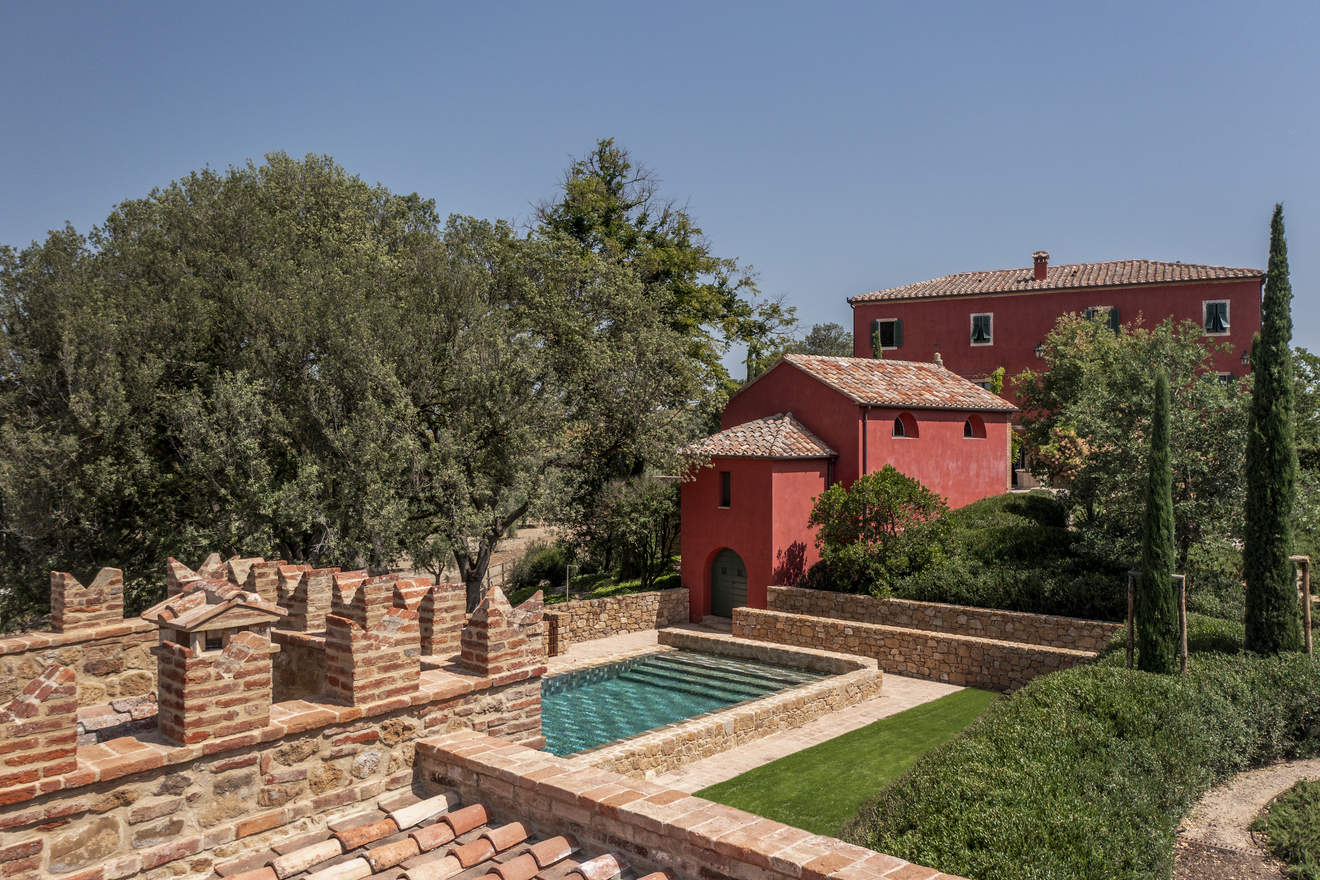
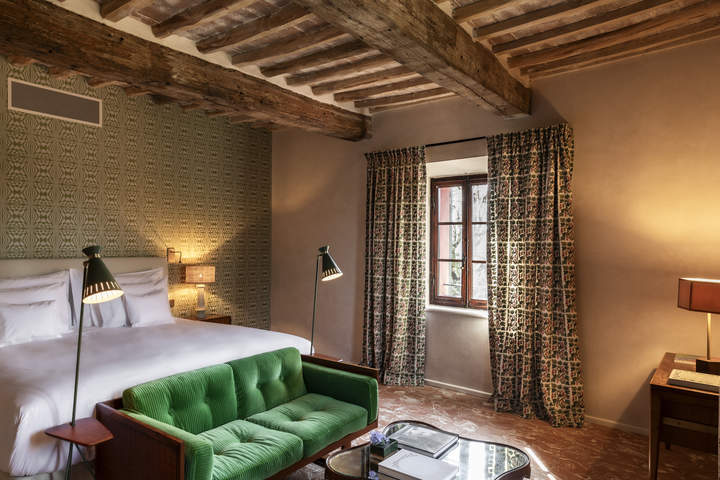
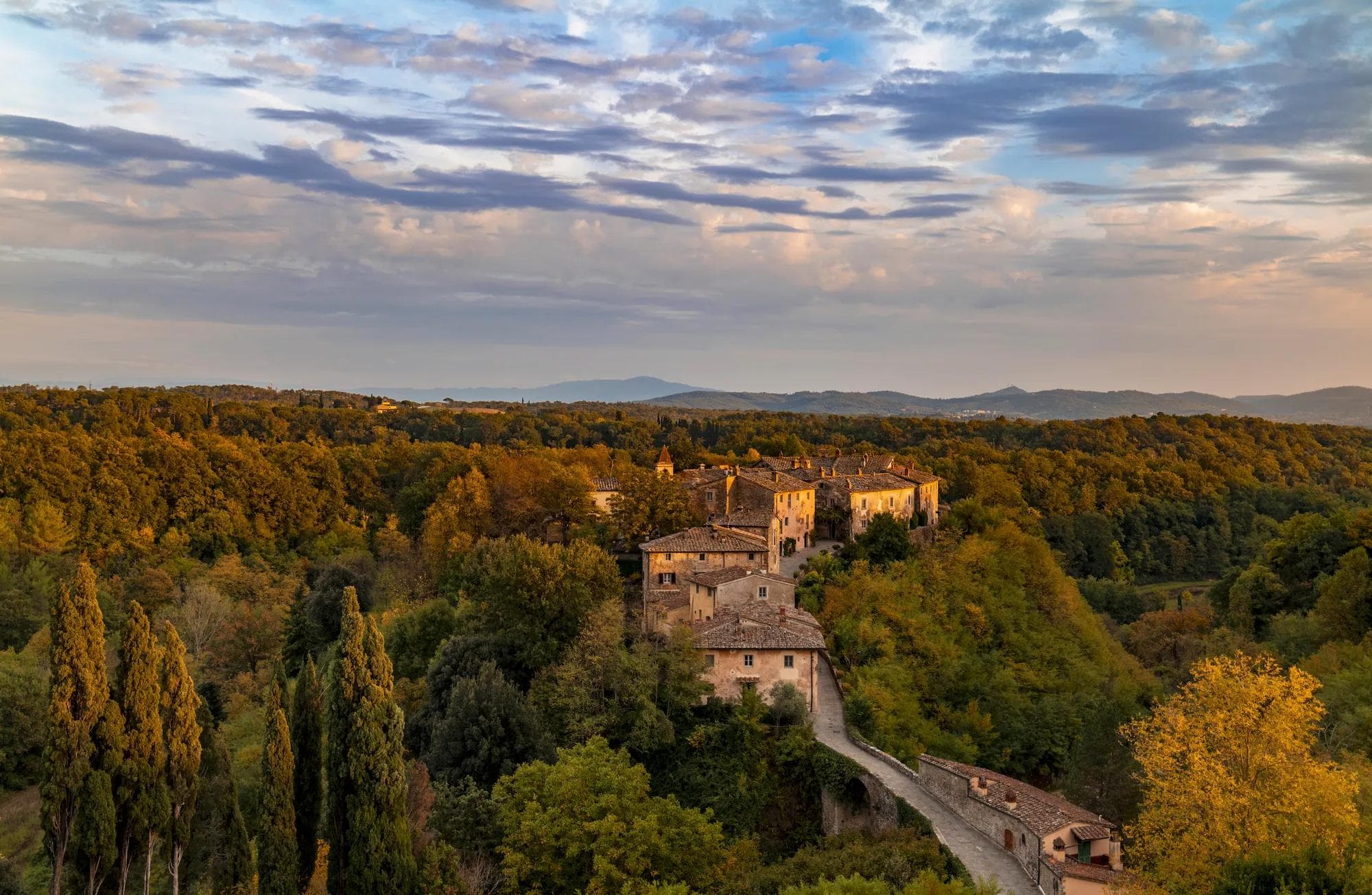
Between Florence and Arezzo lies Il Borro—a medieval hamlet perched on a rocky outcrop in the Upper Arno Valley (Valdarno Superiore). Surrounding the stone buildings are 700 hectares of land, 85 of which are covered with vineyards. The estate’s history stretches back centuries: at different times the village belonged to the Medici family, then to the House of Savoy (from 1904), before being restored in 1993 by Ferruccio Ferragamo and his family. Having spent childhood holidays here in the 1950s with his father, Salvatore Ferragamo, Ferruccio dreamed of bringing new life to the village by restoring the estate and reviving the spirit of a self-sustaining rural community. Il Borro today offers 57 rooms and suites—37 located within the medieval borgo itself, and 20 in the newer, freestanding buildings of the Aia del Borgo area. Each is designed with careful attention to craftsmanship and traditional materials—wood, natural fabrics, and understated classic style. Guests can also stay in the historic Dimora Storica villa (often used for events), as well as in the private villas Casetta, Mulino, and the separate Viesca estate. One of Il Borro’s most fascinating aspects is its community of artisans, who live and work here, carrying on the traditions of old workshops and welcoming guests into their craft. The estate also features the La Corte spa, offering treatments based on local olive oil and grape extracts, as well as two restaurants: Il Borro Tuscan Bistro, for more relaxed dining, and Osteria del Borro, for refined seasonal cuisine. Both follow a farm-to-table philosophy, relying on ingredients grown right on the estate.
2. Lupaia
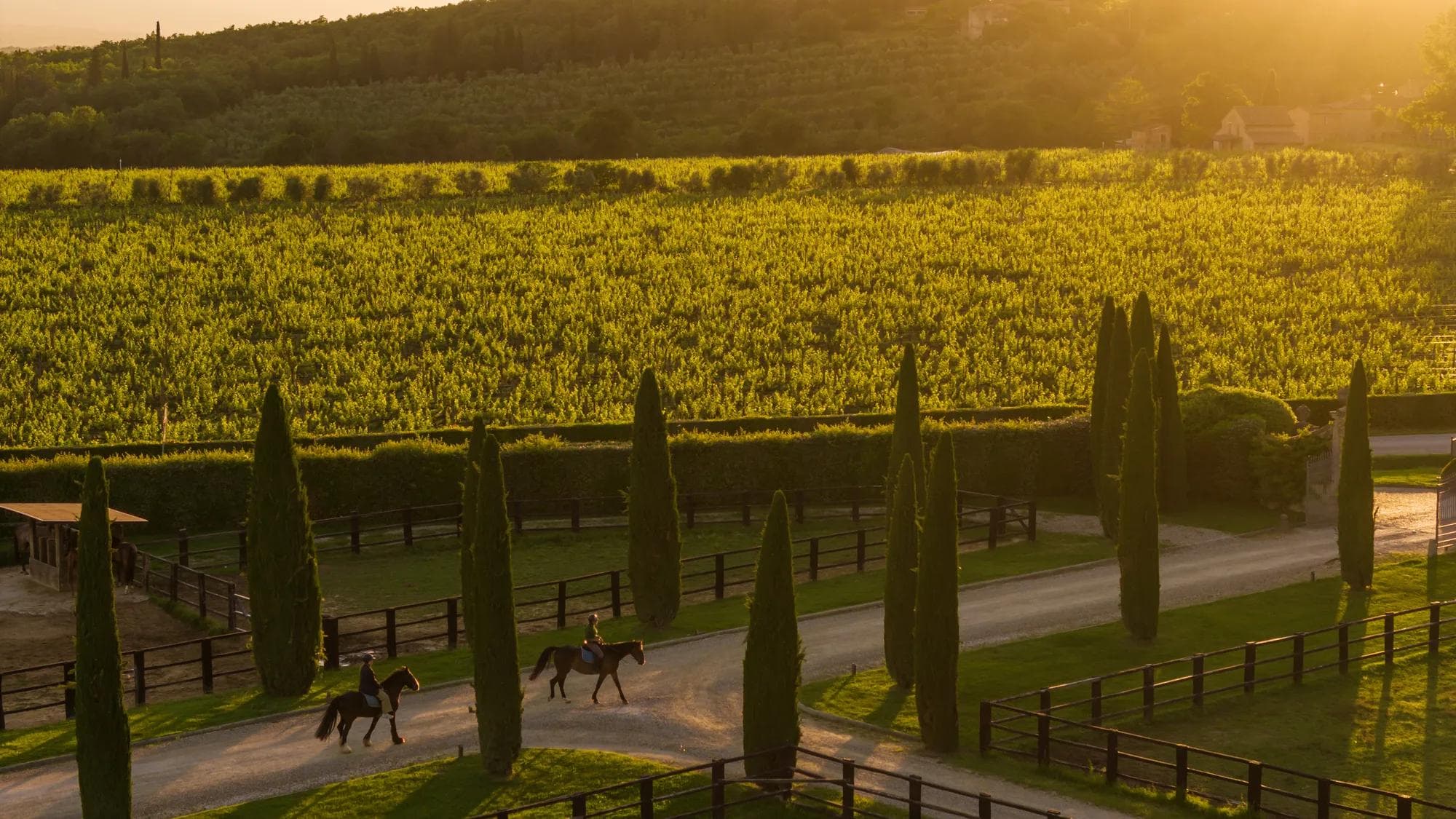
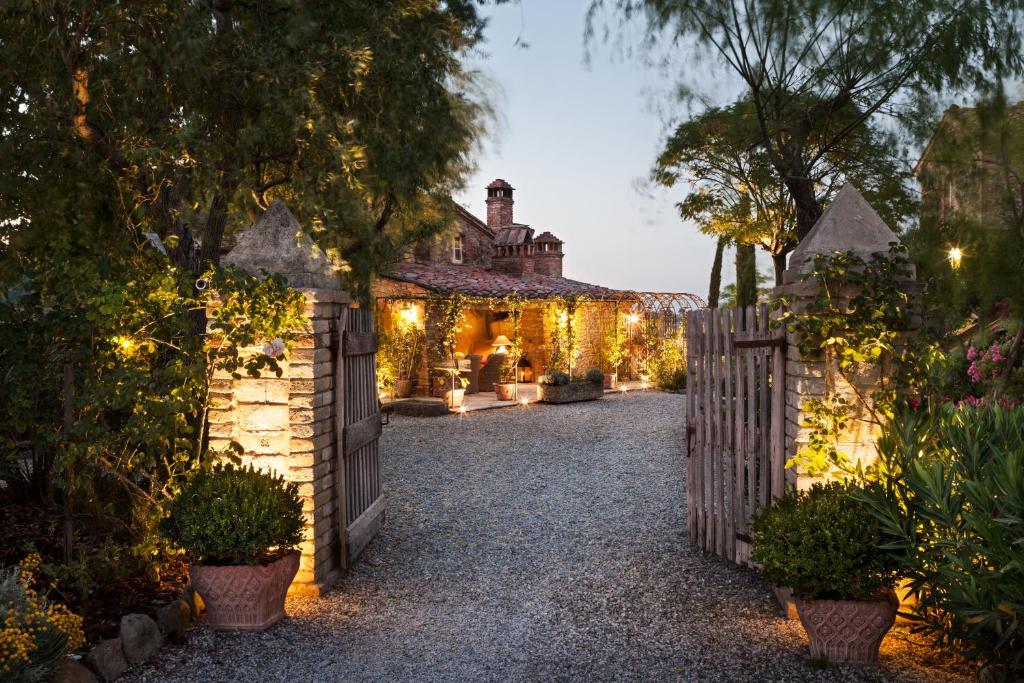
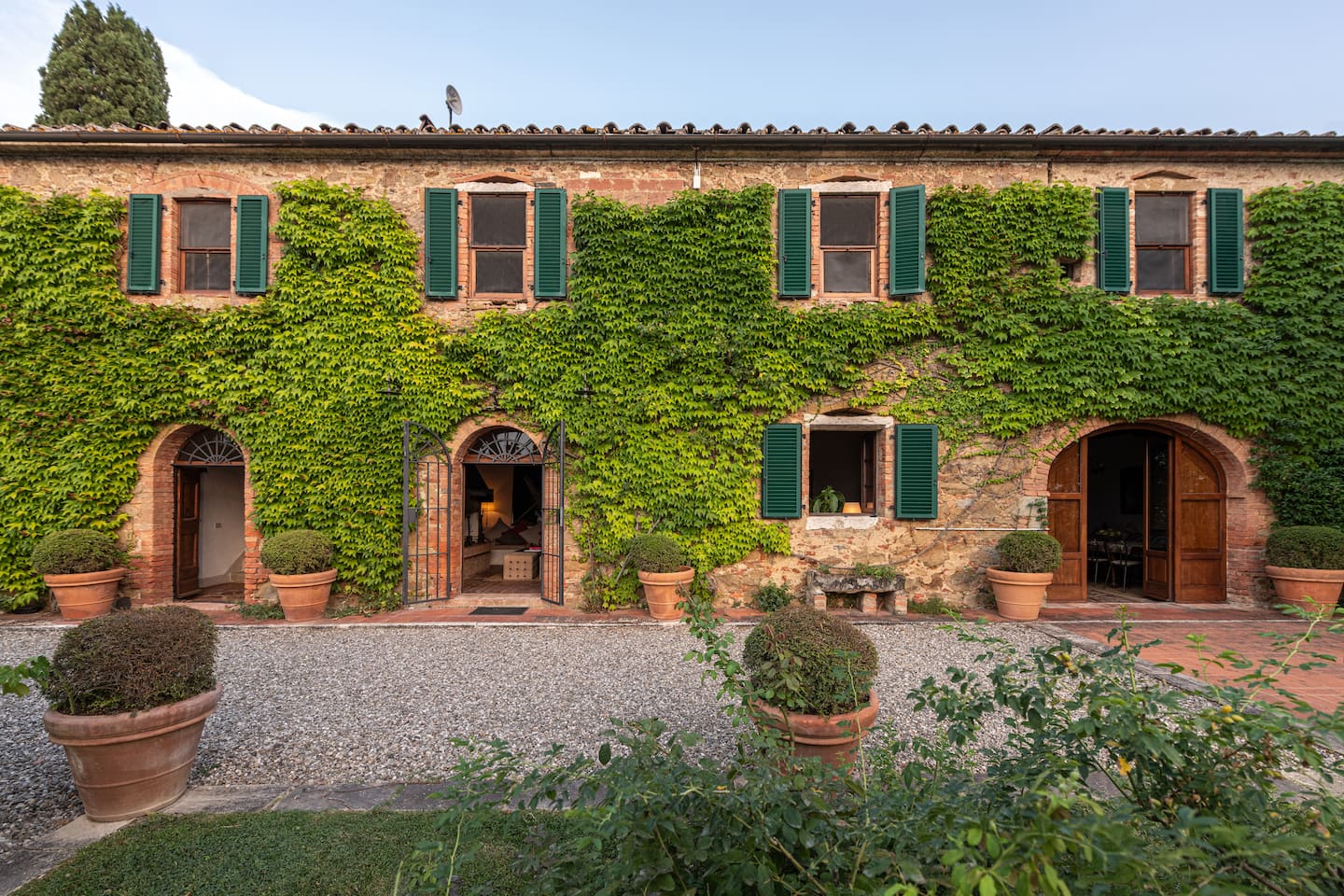
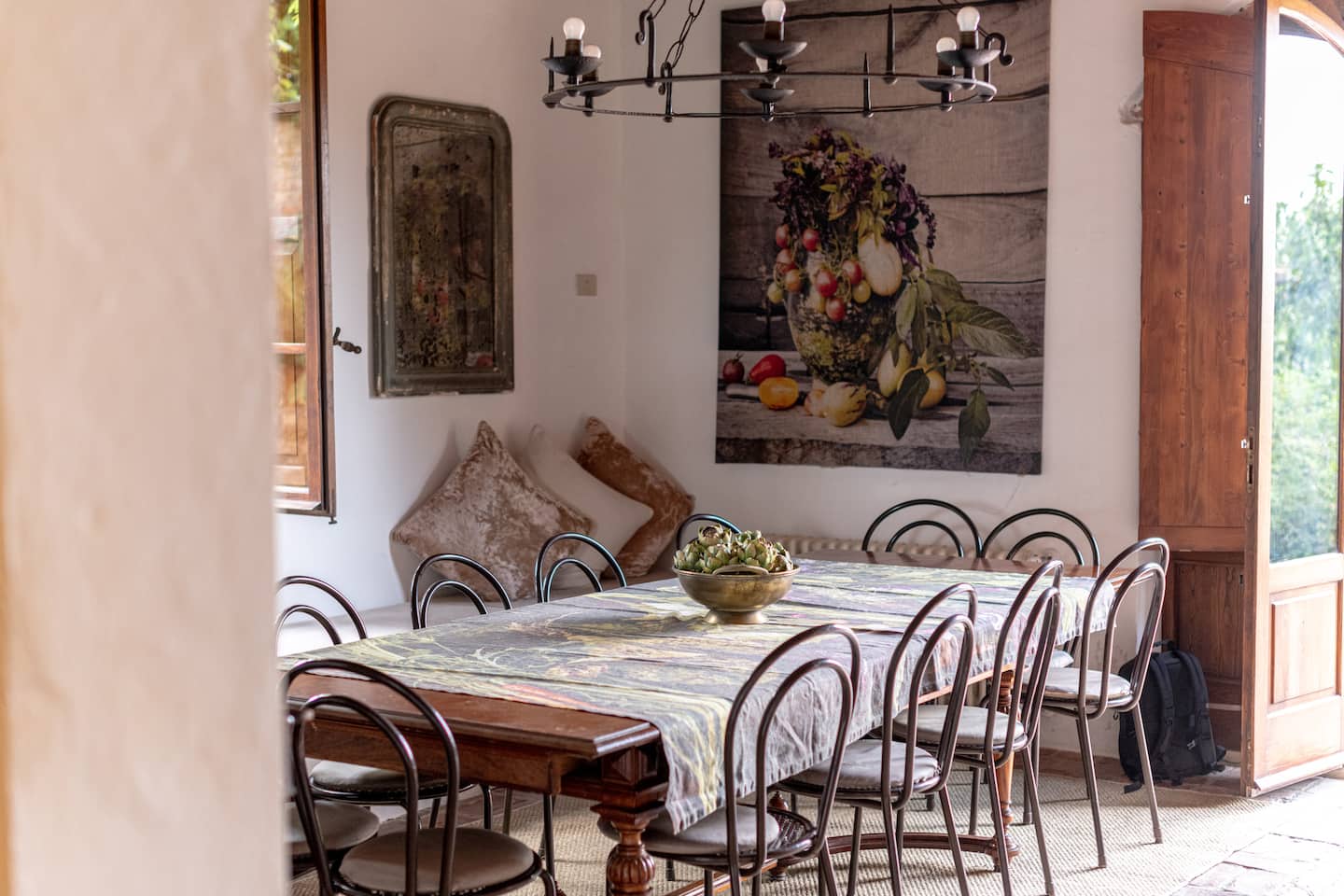
Among the hills of Torrita di Siena, between the Val di Chiana and Val d’Orcia valleys, lies Lupaia—a charming estate in the very heart of Tuscany’s “wine triangle,” surrounded by the renowned wine regions of Vino Nobile di Montepulciano, Chianti Classico, and Brunello di Montalcino. This magical place, originally a farmhouse dating back to 1622, was lovingly transformed into a cozy retreat by an Austrian couple, Heidi and Christopher Müller. There are only 12 rooms and suites, spread across five ivy-covered stone and brick buildings. Each room has its own style: some feature soft headboards and canopy beds, while others are decorated in a rustic or refined Provençal style. Guests can choose the room that resonates most with them. During the day, one can relax in the estate’s secluded corners, enjoying the fresh country air—especially lovely while lounging in a hammock—or sip a glass of chilled wine in the winter garden. Guests gather in the cozy, homey dining room for delicious meals, whether breakfast, lunch, or dinner. Wine lovers will be delighted by the Stanza del Vino—the “Wine Room”—where tastings of local wines take place, from biodynamic Chianti to rich reds from Bolgheri. There’s never a dull moment here—you can try your hand at making homemade pici (traditional Tuscan pasta) or take a walk through the surrounding countryside with Caterina Cardia, an expert in foraging wild edible plants, who happily shares her knowledge.


3. Como Castello Del Nero
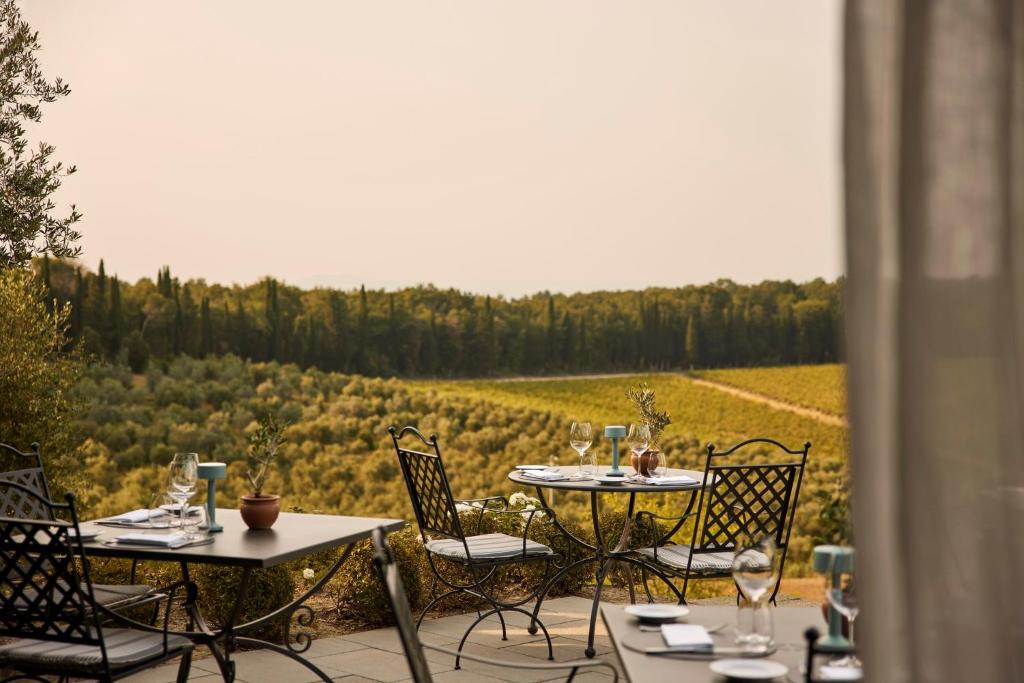
Nestled among the picturesque hills of the Chianti region, surrounded by vineyards and olive groves, Castello del Nero exudes a sense of tranquility. It was this serenity that captivated the Trotta family in 2006, inspiring them to transform the 12th-century castle into one of Italy’s first luxury agriturismi. The next chapter in the estate’s story began when Cristina Ong, founder of COMO Hotels & Resorts, discovered it during a vacation. Enchanted by the atmosphere, she acquired the castle in 2018 and personally oversaw its exquisite restoration, as well as the creation of the Shambhala Retreat—a space dedicated to holistic wellness, mindful rituals, and deep communion with nature. The interiors were reimagined by designer Paola Navone, where rough natural textures are subtly combined with pastel tones and understated contemporary accents. At the same time, the soul of the castle remains alive—vaulted ceilings, original terracotta tiles, and frescoes harmoniously coexist with COMO’s signature minimalist style across 50 refined rooms and suites. The estate features three restaurants, including the Michelin-starred La Torre, though Pavilion is the perfect spot to enjoy a table outdoors with stunning views. Beyond gastronomy and wellness, guests can experience the region in other ways: wine tastings, countryside excursions in a classic Fiat 500, or trips to lesser-known wineries in a vintage Land Rover Defender.
4. Il Falconiere
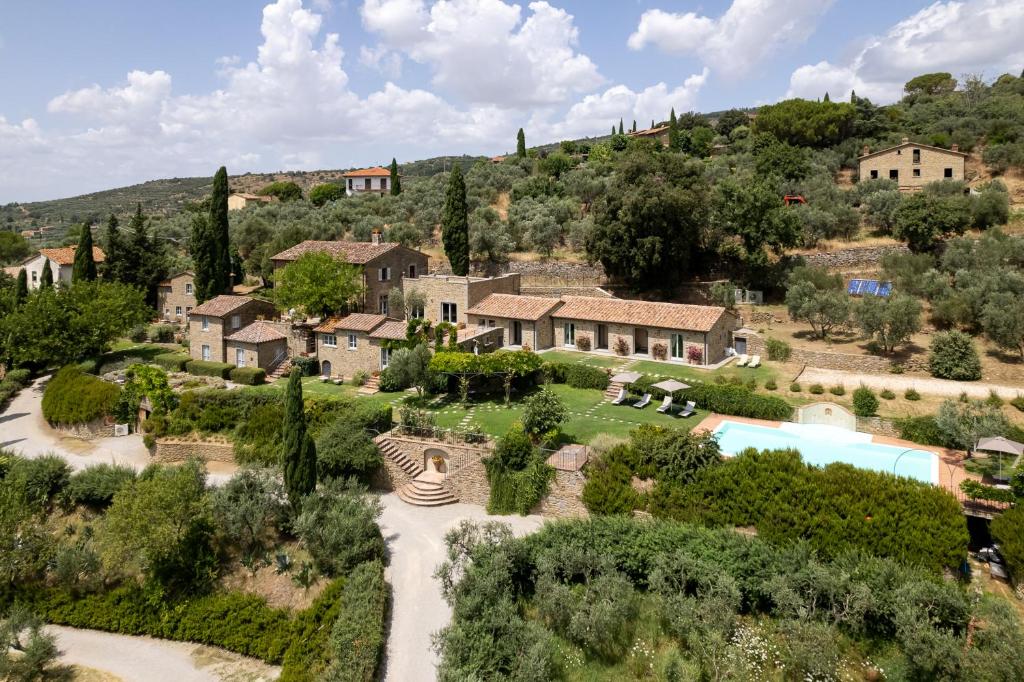
In Tuscany, there is a special love for the hills and their tiny villages, but stepping onto this estate, you enter the enchanting world of Silvia Baracchi—the gracious host and Michelin-starred chef behind Il Falconiere. Nestled in the gentle foothills at the base of Cortona, this retreat is surrounded by 30 hectares of vineyards owned by the Baracchi family. Wine has been produced here for five generations—since 1860, when the family first began cultivating vines on the sun-drenched slopes of Valdichiana. The estate seems to have stepped straight out of a Tuscan fairy tale: historic buildings, including a chapel, a noble villa, a farmhouse, two pools, and a spa, are immersed in the scents of rosemary and lavender. Rooms and suites are scattered throughout the property, each with its own character. Soft pastel tones, romantic hand-painted details by local artisans—everything here feels like a dollhouse. Some rooms feature private balconies with views stretching all the way to Monte Amiata. But the heart of it all is the restaurant. Located in an elegant glass conservatory, with wrought-iron chairs and ceramic accents, it provides the perfect setting for a truly memorable culinary journey. Silvia’s cuisine is a playful interpretation of Tuscan traditions, and the wines served with the dishes are produced just meters away. Begin with a glass of Brut Trebbiano Metodo Classico from Baracchi—a true embodiment of the “zero-kilometer” philosophy and hospitality rooted in over 160 years of winemaking history.

5. La Fornace
La Fornace is a cozy yet stylishly designed countryside villa, perched on a sun-drenched Tuscan hill. The property is surrounded by lush gardens, lavender fields, and silvery olive groves. It offers breathtaking views of rolling hills—a perfect backdrop for both secluded relaxation and lively gatherings with family and friends. Just a few minutes’ walk from the charming village of Montisi, and with easy access to Montalcino, Siena, and Florence, the villa is ideally situated for exploring the region’s cultural, culinary, and winemaking heritage. The interiors are spacious and bright: arched passageways, cool stone floors, and open layouts flow seamlessly onto shaded terraces—perfect for outdoor dinners or sunset aperitifs. The large country-style kitchen opens directly onto multiple outdoor areas, while the lower terrace leads to an impressive pool surrounded by brickwork and lavender-lined paths. Everything here invites relaxation, whether lounging by the water, playing pétanque, table tennis, or cycling through the surrounding countryside. The villa accommodates up to 14 guests, making it ideal for large families or groups of friends. Guests also have access to a private cinema, a library, and a sunlit art studio overlooking the hills—every corner of the estate encourages slowing down and savoring the beauty around you.
6. Casa Ruffino
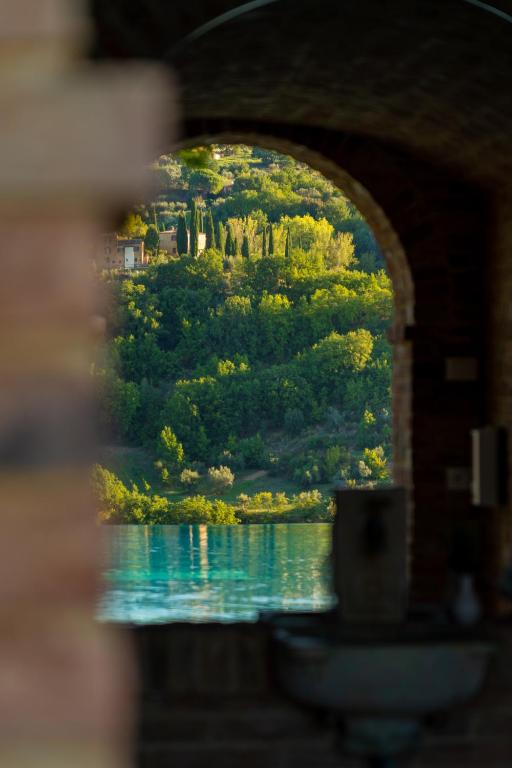
If your idea of the perfect holiday is waking up to a sea of vineyards stretching across the gentle slopes of the Chianti hills, then this is the place for you. And best of all—it’s only ten minutes from the center of Florence. The villa is located within the Tenuta Poggio Casciano estate, where wine, art, and hospitality come together in perfect harmony. Each of the eight rooms at the boutique Relais hotel overlooks the vineyards—whether through a window or from a balcony, it feels like stepping into a true Tuscan postcard. The interiors are striking: terracotta floors pay homage to Tuscan traditions, while the rest of the décor leans modern—minimalism, clean lines, neutral tones, and carefully chosen color accents create a pleasing contrast with the rural landscape outside. In addition to the rooms, the estate features an infinity pool with calming views—perfect for lazy afternoons—along with a restaurant where seasonal Tuscan dishes are artfully paired with Ruffino wines. Wine lovers will especially enjoy tours of the wine cellar and tastings, offering a deeper connection to the land and the centuries-old winemaking traditions that surround you everywhere.


7. Castello di Vicarello
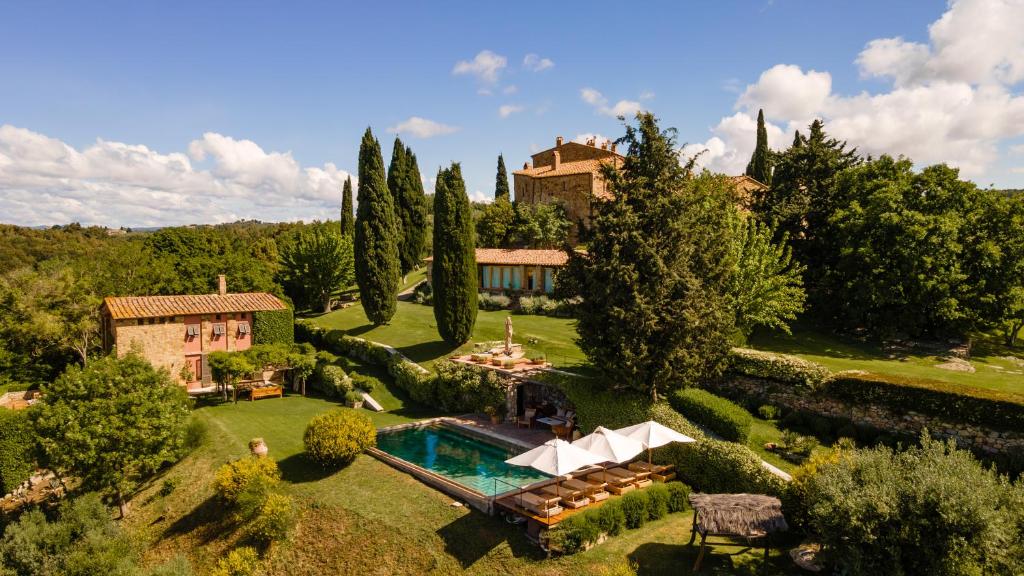
Perched on the Poggi del Sasso hills in the southern Maremma, the Castello di Vicarello estate tells the story of a family legacy that continues to flourish from generation to generation. It all began with a chance discovery: in the late 1980s, Carlo and Aurora Baccaresi Berti stumbled upon the ruins of a 12th-century castle during a horseback ride. Today, it is one of the most beautiful countryside estates in the region, managed by their three sons—Brando, Neri, and Corso. Spread across 40 hectares are organic vineyards, olive groves, and lush gardens. There are just 10 unique suites, each with its own character—from classic aristocratic elegance to more modern, airy designs. Velvet upholstery, antique furniture, Persian rugs, canopy beds, and ethnic accents create a refined eclectic style. One of the most memorable rooms is the Spa Suite: perfect for the warm season, featuring a private outdoor Jacuzzi carved from an ancient wine barrel, a sauna, a hammam, and panoramic windows overlooking the rolling hills. Wine is at the very heart of Vicarello. Carlo and Brando strive to create a Tuscan version of Bordeaux wines. Three vineyards spanning seven hectares produce five exquisite wines—a must for tastings or pairing with an al fresco dinner. Swimming in the infinity pool, cycling around the estate on e-bikes, enjoying candlelit dinners under the stars, or reading books on the freshly mown lawn—every moment here is infused with a sense of harmony and connection with nature.
8. Pieve Aldina
An urban countryside house in the very heart of Chianti Classico, surrounded by slender cypress trees, lush olive groves, terraced vineyards, and rolling mint-colored hills—this is the place chosen by Frédéric Beus and Guillaume Fouché to expand their collection of Domaines de Fontenille, already renowned in France and Menorca. Once a 16th-century episcopal complex, the estate has now been restored with deep respect for its past. Its ancient walls still protect a 10th-century Romanesque church, elegant frescoes, Tuscan cotto floors, and original stone arcades, seamlessly blending with rustic-style interiors. The twenty rooms and suites are decorated in pastel greens, pinks, and blues, where modern spirit meets the historical atmosphere of the building. Life here unfolds at a leisurely pace: unhurried breakfasts in the courtyard, lazy afternoons by the secluded pool among the trees, and pasta-making or traditional Tuscan cooking classes in a homey setting. And, of course, one must not forget that you are in one of the finest wine regions—strolls around the estate with wine tastings (especially at Tenuta Antinori nel Chianti Classico) become part of daily life. As the sun sets over the horizon, it’s the perfect time to settle in the garden with an aperitif in hand. The cuisine is overseen by the talented chef Niccolò Pini, whose contemporary presentations carefully preserve the authentic flavors of Tuscan gastronomy.


9. Borgo San Felice
If only sound could be woven into words: the gentle chirping of birds in Borgo San Felice is a song that lingers in memory, soothing and almost impossible to describe. Combined with the otherworldly beauty of the borgo, a stay here feels more like a dream, where time loses its clear boundaries. Sitting in the sun-drenched Piazza San Felice, it’s easy to imagine being on a film set or transported to another era. But this is no set—it is a real Tuscan village, carefully preserved and reimagined for those seeking a poetic escape from everyday life. Located in the heart of Chianti Classico, the journey begins even before arrival—driving along the avenues of perfectly tended vineyards that produce some of the region’s most renowned wines. As the name suggests, Borgo San Felice was once a working village. Its neo-Gothic chapel, former school, bakery, and olive mill have survived to this day—now transformed into cozy rooms, a relaxing spa, and two excellent restaurants, thanks to a delicate restoration completed in the late 1990s. The rooms are exactly what you would expect in a Tuscan farmhouse: headboards upholstered in playful shades of blue, green, and terracotta; light linen fabrics; soft armchairs; and views either over the vineyards or the borgo itself. Be sure to witness at least one sunrise—the sky can blush with lilac hues, lending the landscape a magical haze. And of course, as this is a wine estate, wine is at the center of attention. In addition to Sangiovese and Punitiello varieties, special focus is given to Vigorello—the native grape from which the estate created its first Super Tuscan wine in 1968. Enjoy a glass at sunset right in the piazza—it is truly one of those unforgettable moments.

10. Monteverdi
Monteverdi is located in Castelluccio del Trinoro—a historic settlement atop a hill, home to only ten residents besides the hotel. This unique borgo was opened by Michael Chiofi, who fell in love with the Val d’Orcia. It started as a cozy five-room B&B, and today Monteverdi has grown into a full-fledged estate with 20 rooms and three separate villas. The location is truly spectacular: on one side, velvet hills of the Val d’Orcia and Monte Cetona unfold, and on the other, panoramic views stretch to Monte Amiata, Montepulciano, and Montalcino—regions renowned for their Nobile and Brunello wines. Monteverdi is constantly evolving. In 2023, the estate opened Zita, an osteria-style restaurant offering Tuscan cuisine. This year also saw the launch of another gastronomic project—Oreade, an exquisite fine-dining restaurant led by chef Riccardo Bacchottini. Note: there are only four tables, situated in a unique space partially built into the rocks—reservations are essential. The estate also features a bar, a wonderful wellness area with two saunas, a pool, and an outdoor ice bath, as well as a contemporary art gallery showcasing international works curated by London-based curator Sarah McCrory. Perhaps one of the most memorable experiences is a cooking class with Giancarla: together you will prepare homemade egg pasta, an appetizer, and a dessert, then enjoy the meal under the pergola with a view that is hard to forget.

11. Casa Newton
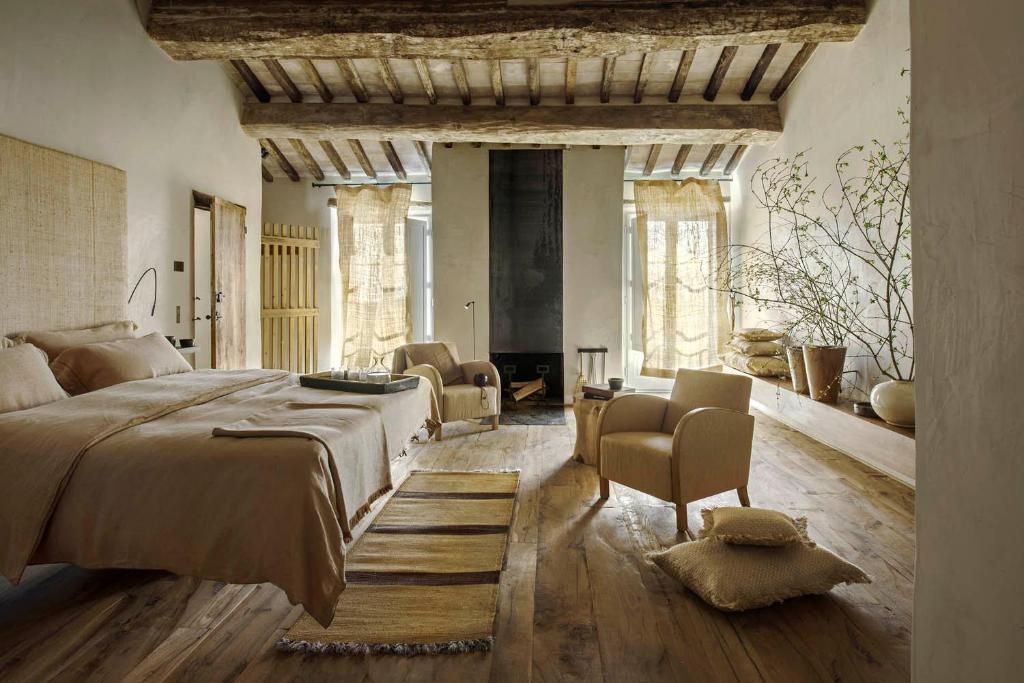
Casa Newton is strategically located between Montepulciano and Montalcino, just ten minutes from Pienza, offering magnificent views from your window each morning. However, the best vistas are from the La Loggia terrace, where stone arches frame the Val d’Orcia hills, and an evening aperitif at sunset feels especially enchanting. Originally built in the 19th century by Gervasio Newton, a relative of Isaac Newton, this historic farmhouse was carefully transformed by Swiss architect and designer Antoni Berte Kjos and her husband Philippe, in collaboration with Italian architect Jacopo Venerosi Pesciolini. The result is an eclectic estate infused with the spirit of contemporary art and design. Each of the 11 guest rooms is individually styled: original terracotta floors and wooden ceiling beams have been preserved, while interiors feature mid-20th-century vintage furniture, hand-painted details, and walls upholstered with fabric custom-made by Venetian artisan Chiarastella Cattana. Art is a central theme of the estate—even the gardens, designed by award-winning landscape architect Luciano Giubbilei, resemble impressionist paintings. Strolling along paths scented with rosemary and lavender (and spotting rare flowers along the way), you arrive at the pool, surrounded by candy-colored umbrellas. Nearby is the Il Cervo restaurant, led by chef Sara Scaramella, where local Tuscan dishes are perfectly paired with deep, berry-colored wines. The estate also has its own contemporary winery, Fabbrica Pienza, producing organic wines from 35 hectares of vineyards. Visiting the winery is recommended not only for the wine but also to admire the impressive design harmoniously integrated into the surrounding landscape.